Karnataka food · 4 min read
Kodubale, chakli and nippattu: Karnataka's crunchy snacks
The fried rice-flour snacks kept in steel tins across Karnataka, and why they belong next to a cup of filter coffee.
Published
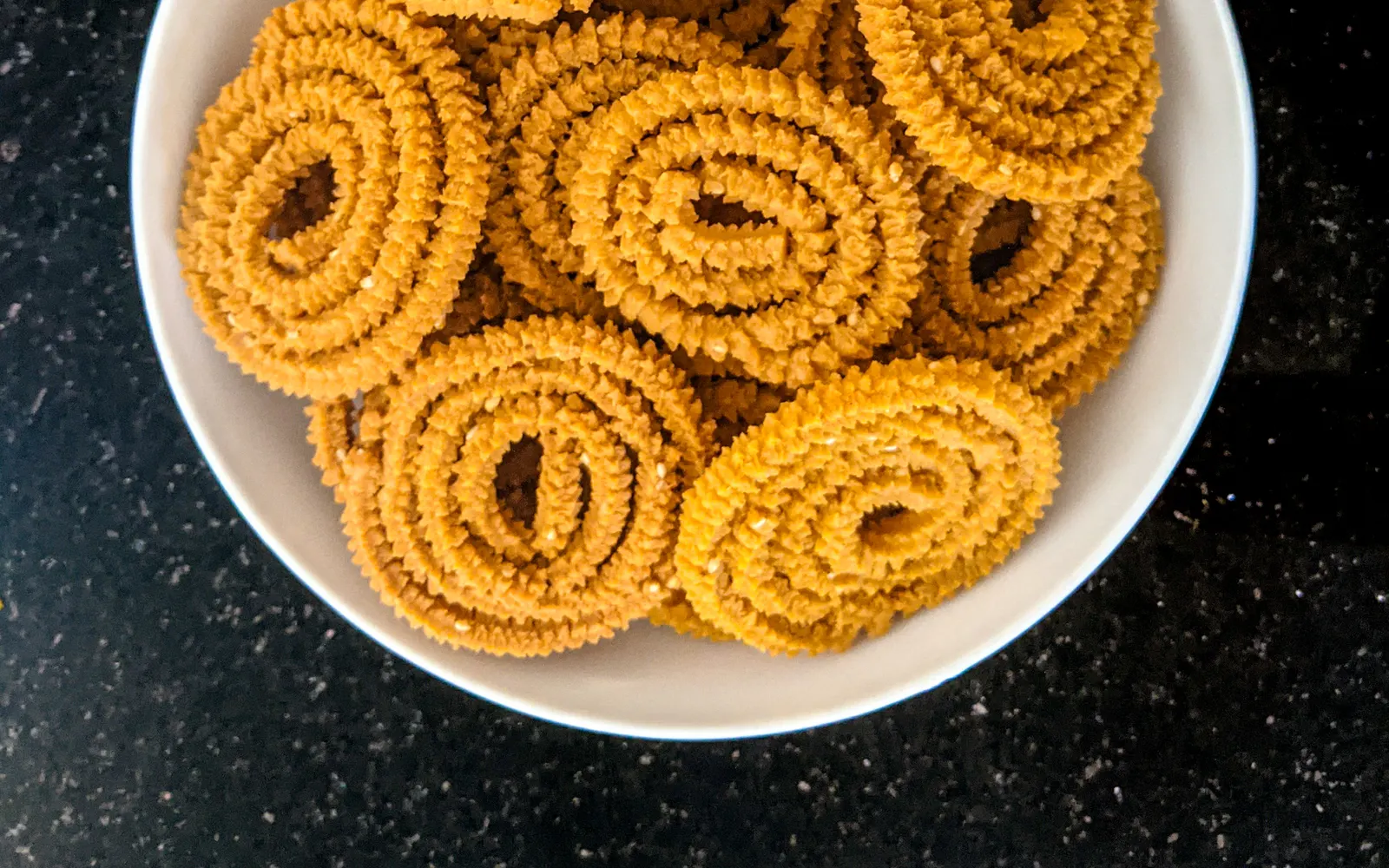
In many Karnataka homes there is a steel tin on a kitchen shelf, and around four in the afternoon it comes down with the coffee. What is inside depends on the house and the season, but three snacks turn up more than any others: kodubale, chakli and nippattu. All three start with rice flour and end in hot oil, and each has its own shape and bite.
Kodubale: the spicy ring
Kodubale takes its name from kodu, a horn, and bale, a bangle. The dough is rice flour mixed with roasted gram flour, grated coconut, red chilli, cumin, hing and a little hot oil or butter. It is rolled by hand into thin ropes, each one joined into a ring about the size of a bangle for a small child, and fried slowly until it is deep red-brown. A good kodubale is hard on the outside, crumbly inside and noticeably hot.
Chakli: the spiral
Chakli, called chakkuli in Kannada and murukku in Tamil, is the snack with the spiked spiral. Rice flour and urad dal flour are mixed with sesame or cumin, salt and butter into a soft dough. The dough is loaded into a brass or steel press fitted with a star-shaped plate and squeezed out in a coil onto a cloth or ladle, then lifted into the oil. The ridges fry crisp, which is what gives chakli its light, brittle crunch. Benne chakli, made with extra butter, is softer and melts faster.
Nippattu: the flat cracker
Nippattu is a flat disc, a rice cracker studded with crushed peanuts, roasted gram, curry leaves, sesame and red chilli. The dough is patted flat between the palms or on a greased sheet, pricked so that it does not puff, and fried until golden. It is close kin to thattai in Tamil Nadu and chekkalu in Andhra Pradesh. In Bengaluru it is also broken up and dressed with onion, tomato, carrot and chutney as a street snack called nippattu masala.
The rest of the tin
The same shelf often holds khara boondi and mixture, kara sev, and from Mandya district the Maddur vada, a flat, onion-rich fritter first sold to train passengers at Maddur station. Bengaluru's bakeries add Congress kadlekai, split peanuts roasted with chilli, pepper and curry leaves.
Why they suit a hotel
These snacks are made to keep. Fried dry and stored in an airtight tin they stay crisp for weeks, which is why they were made in batches before festivals such as Krishna Janmashtami and Deepavali. For a hotel or caterer that makes them easy to serve: two or three pieces in a small bowl with a tumbler of filter coffee is a welcome that tells a guest where they are.
The local ingredients
The ingredient list is a short tour of the state: rice from the canal-fed south, groundnut from Chitradurga and Tumakuru, coconut from Tiptur, Byadagi chilli from Haveri, and groundnut or coconut oil to fry it in. A pinch of hing in the dough is what gives kodubale its savoury depth.